
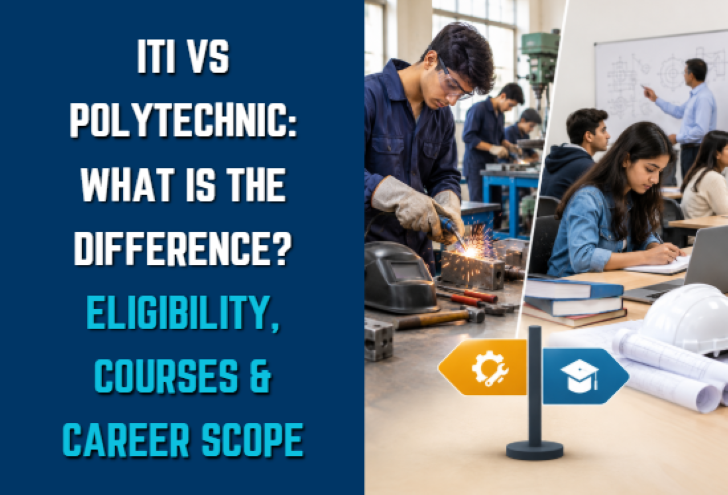
Are you confused about ITI vs Polytechnic after Class 10? Both are established technical education pathways in India but they differ in their learning style, course structure and career direction. The scale of vocational education is significant, with 14,643 ITIs and around 26.58 lakh trainees enrolled under the DGT’s Craftsmen Training Scheme.
Understanding the ITI vs Polytechnic after 10th difference can help you choose a pathway that matches your interests and goals. Students who enjoy hands-on workshop training may consider ITI, while those interested in broader engineering and technical education may explore Polytechnic. Duration, subjects, practical exposure and future study options should also be part of the decision.
What Is ITI?
ITI or Industrial Training Institute, is a vocational education pathway focused on developing practical skills for specific technical trades. The Directorate General of Training (DGT) manages the Craftsmen Training Scheme, with eligibility and course duration varying by trade.
Students considering ITI courses after 10th can choose from trades such as:
- Electrician
- Fitter
- Welder
- Refrigeration and Air Conditioning Technician
- Electronics Mechanic
- COPA
The training combines trade theory with hands-on practice, helping students develop practical and job-oriented technical skills.
What Is Polytechnic?
Polytechnic is a technical education pathway that provides diploma-level learning in engineering and applied technical fields. It combines theoretical concepts with laboratory sessions, practical training and project work.
Students considering Polytechnic courses after 10th can explore disciplines such as:
- Mechanical Engineering
- Electrical Engineering
- Civil Engineering
- Computer Science Engineering
- Electronics Engineering
For official information on diploma-level technical education and curriculum, students can also refer to the AICTE Diploma Engineering framework.
ITI vs Polytechnic: What Is the Difference?
The ITI vs Polytechnic difference is simple: ITI focuses on trade-based practical skills, while Polytechnic offers broader technical and diploma-level education.
|
Factor |
ITI | Polytechnic |
|
Main Focus |
Specific trade skills (e.g., Electrician, Fitter, Welder) |
Technical and engineering education (e.g., Mechanical, Civil, Electrical) |
| Learning Style | Mainly practical and workshop-based |
Theory + laboratory + practical learning |
|
Qualification |
Trade-based certificate | Diploma qualification |
| Study Areas | Trade theory, workshop practice, tools and safety |
Engineering mathematics, technical subjects, laboratories and projects |
|
Practical Work |
Wiring, welding, fitting, machine/tool practice | Engineering labs, computer work, technical projects and design tasks |
|
Career Direction |
Technician, electrician, fitter, welder |
Junior technical, technician and engineering-support roles |
| Further Studies | Advanced vocational training, apprenticeship and applicable pathways |
Further technical education and B.Tech after Polytechnic, where eligible |
Understanding the ITI and Polytechnic difference can help students compare both options based on their interests, preferred learning style and future education plans.
ITI vs Polytechnic: Courses, Eligibility & Duration
The following table gives students a quick view of course options, entry requirements and typical duration under ITI vs Polytechnic after 10th. The information is based on DGT and AICTE frameworks, along with courses listed by Longowal Group of Colleges (LGC).
|
Course |
Pathway | General Eligibility | Typical Duration |
| Fitter | ITI | 10th with Science & Mathematics |
2 Years |
|
Electrician |
ITI | 10th with Science & Mathematics | 2 Years |
| Electronics Mechanic | ITI | 10th with Science & Mathematics |
2 Years |
|
Refrigeration & AC Technician |
ITI | 10th with Science & Mathematics | 2 Years |
| Wireman | ITI | 8th Pass |
2 Years |
| Welder | ITI | 8th Pass |
1 Year |
|
COPA |
ITI | 10th Pass | 1 Year |
| Mechanical Engineering | Polytechnic | 10th Pass |
3 Years |
|
Electrical Engineering |
Polytechnic | 10th Pass | 3 Years |
|
Civil Engineering |
Polytechnic | 10th Pass |
3 Years |
|
Computer Science Engineering |
Polytechnic | 10th Pass |
3 Years |
| DMLT | Polytechnic/Technical Diploma | Course-specific |
Check current requirements |
DGT specifies the ITI trade durations, while AICTE provides the general framework for Engineering and Technology diploma programmes. LGC lists these ITI and Polytechnic options at its Derabassi campus near Chandigarh.
ITI vs Polytechnic Subjects and Practical Training
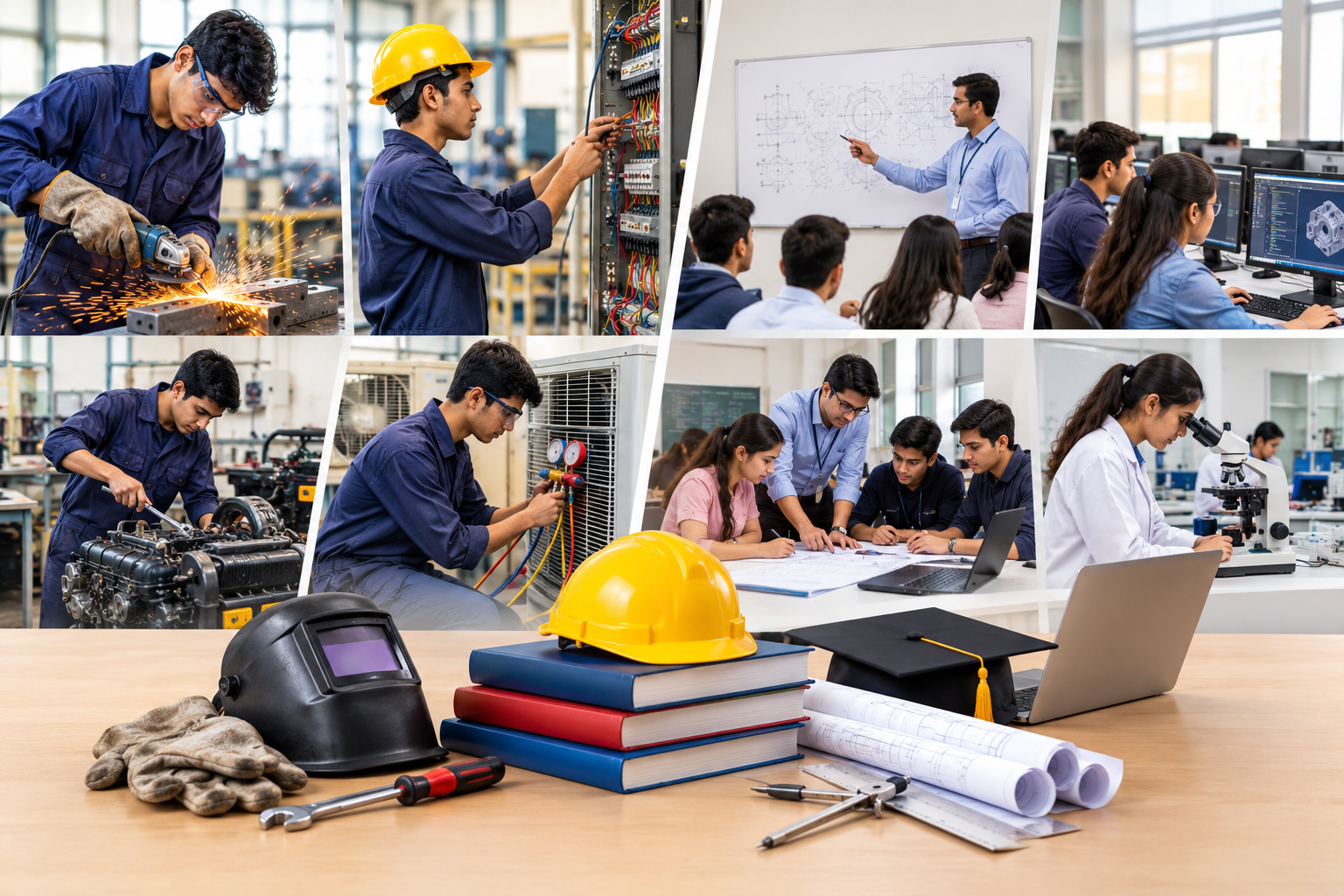
The ITI syllabus focuses on trade skills and workplace training, while Polytechnic subjects cover broader engineering concepts, technical theory, laboratory work and applied technical projects.
What Students Learn
ITI syllabus may cover:
- Trade theory
- Tools and equipment
- Workshop practices
- Safety procedures
- Employability skills
Polytechnic subjects may include:
- Engineering Mathematics
- Engineering fundamentals
- Branch-specific subjects
- Laboratory work
- Technical projects
For a broader understanding of the curriculum and training structure, students can refer to the DGT training framework for ITI and the AICTE Diploma Engineering Model Curriculum.
How Practical Training Differs
Practical work is an important part of both pathways but the activities differ according to the programme.
- ITI: Trade practice, equipment handling, workshop tasks and job-related activities
- Polytechnic: Laboratory experiments, technical projects, computer-based work and engineering applications
This difference can help students decide whether they prefer focused trade training or broader technical education.
ITI vs Polytechnic Career Scope
The ITI vs Polytechnic career path depends on the trade or branch you choose. ITI is more trade-focused, while Polytechnic offers broader technical roles.
Career Options After ITI
Students completing ITI can explore roles related to their specific trade:
- Electrician: Electrician, Electrical Technician
- Fitter: Fitter, Maintenance Technician
- Welder: Welder, Welding Operator
- Electronics Mechanic: Electronics Technician
- COPA: Computer Operator, IT Support Assistant
- Refrigeration & AC Technician: RAC Technician, HVAC Technician
ITI can also provide pathways to apprenticeship, employment and self-employment opportunities. (DGT)
Career Options After Polytechnic
Polytechnic graduates can explore technical roles based on their diploma branch:
- Mechanical Engineering: Production Technician, Maintenance Technician
- Electrical Engineering: Electrical Technician, Site Technician
- Civil Engineering: Site Supervisor, CAD Technician
- Computer Science Engineering: IT Support Executive, Junior Web Developer
- DMLT: Laboratory Technician, Lab Assistant
Important Note: Actual job roles can vary based on the employer, industry, experience and skills.
ITI vs Polytechnic Salary and Job Opportunities
The ITI vs Polytechnic salary can vary by trade, diploma branch, role, experience and employer. Apprenticeship stipend data can provide a useful benchmark but it should not be treated as a guaranteed starting salary.
Under the revised Apprenticeship Rules effective 11 September 2025:
- ITI/Certificate holders: Minimum stipend of ₹9,600 per month
- Diploma holders: Minimum stipend of ₹10,900 per month
These are prescribed apprenticeship stipend rates, not regular job salaries. For the official figures, refer to the Government of India Apprenticeship Rules, 2025.
When comparing ITI job opportunities and Polytechnic job opportunities, also consider:
- Job role
- Industry
- Technical skills
- Experience
- Career growth
- Further education
The better comparison is not only about starting pay; it is also about the type of work, skill development and long-term career path.
Which Is Better: ITI or Polytechnic After 10th?
There is no single answer to ITI or Polytechnic which is better. The suitable option depends on your preferred learning style, career goals and plans for further education.
|
Consider This |
ITI May Suit You | Polytechnic May Suit You |
|
Learning style |
Workshop-based |
Classroom + laboratory |
| Main interest | Skilled trade |
Engineering/technical field |
|
Training focus |
Occupational skills | Technical + practical learning |
| Future plan | Trade work or apprenticeship |
Technical work or further studies |
Students should also compare the exact course, duration and eligibility before choosing between ITI vs Polytechnic after 10th.
Higher Studies and Further Training After ITI and Polytechnic
The next step after ITI vs Polytechnic depends on your qualification and the admission rules of the programme.
- After ITI: Students may explore CITS in trades such as Electrician, Fitter and Welder, along with relevant apprenticeship opportunities. See the DGT CITS programme details.
- After Polytechnic: Eligible diploma holders can explore B.Tech lateral entry in areas such as Mechanical, Civil, Electrical and Computer Science Engineering. See the AICTE Approval Process Handbook.
Check the latest eligibility requirements before choosing a specific programme.
ITI and Polytechnic Courses at LGC
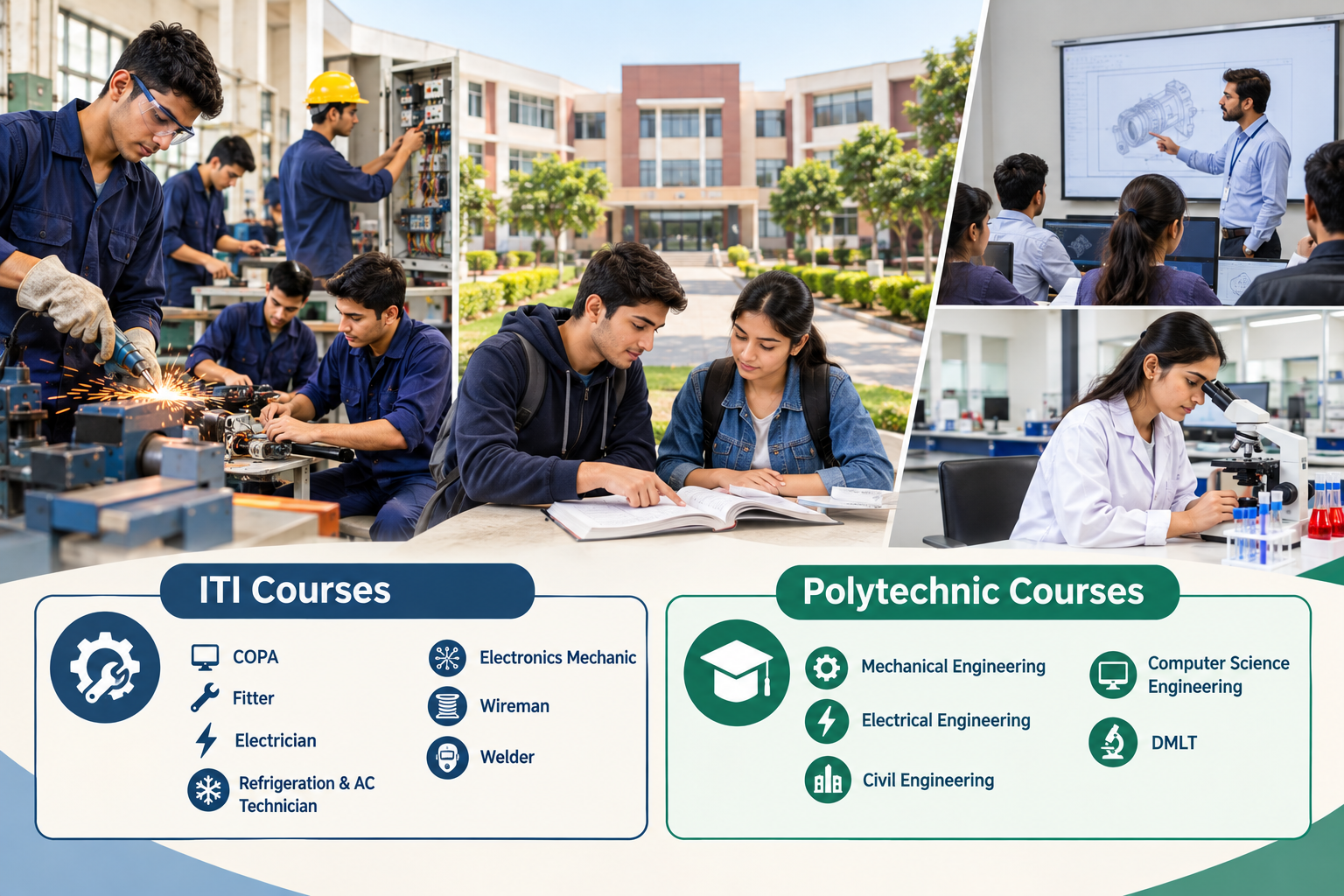
Longowal Group of Colleges (LGC) in Derabassi, near Chandigarh, offers both ITI and Polytechnic programmes.
ITI Courses
- COPA
- Fitter
- Electrician
- Refrigeration & AC Technician
- Electronics Mechanic
- Wireman
- Welder
Polytechnic Courses
- Mechanical Engineering
- Electrical Engineering
- Civil Engineering
- Computer Science Engineering
- DMLT
Students comparing ITI in Derabassi and Polytechnic in Derabassi can explore both pathways at LGC.
Start Your Technical Education Journey
Ready to choose the right technical pathway? Explore ITI courses and Polytechnic courses at LGC to find a programme that matches your interests, skills and future career goals.
Longowal Group of Colleges (LGC)
Address: College Road, Derabassi, Distt. SAS Nagar, Mohali (Near Chandigarh)
Call Us: 99151-58000, 81466-58000
Mail Us: enquirylgcderabassi@gmail.com
Final Thoughts on ITI vs Polytechnic
Understanding the ITI vs Polytechnic difference can make your decision after Class 10 easier. ITI focuses on trade-based practical training, while Polytechnic offers broader technical education. Consider your interests, preferred learning style and long-term career plans before choosing either pathway.
Longowal Group of Colleges (LGC) offers both ITI and Polytechnic programmes near Chandigarh, giving students different technical study options. Explore the available programmes and compare them with your goals before taking the next step.
FAQs – ITI vs Polytechnic: What Is the Difference? Eligibility, Courses & Career Scope
Q1. What Is the Difference Between ITI and Polytechnic?
Ans. The difference between ITI and Polytechnic is mainly the type of education. ITI focuses on trade-based practical training, while Polytechnic provides broader technical education through diploma programmes.
Q2. ITI vs Polytechnic Which Is Better?
Ans. ITI vs Polytechnic which is better depends on your interests and future plans. ITI may suit students who prefer practical trade training, while Polytechnic may suit those seeking broader technical education.
Q3. Is Polytechnic Better Than ITI?
Ans. The answer to Is polytechnic better than ITI? depends on your preferred learning style, career goals and plans for further education. Both pathways serve different technical education needs.
Q4. Can I Do ITI After 10th?
Ans. Yes, students can pursue many ITI courses after 10th. However, eligibility varies by trade, so students should check the current requirements for their chosen course.
Q5. Can I Do B.Tech After Polytechnic?
Ans. B.Tech after Polytechnic may be possible through lateral-entry admission, depending on the university, branch and applicable eligibility rules. Students should verify the latest admission requirements before applying.